SOPHIE ELISABETH
SUBRITZKY
(NÉE KÖRBER)
23 APRIL 1798 - 11 APRIL 1875
The MatriarchMother of three families. Buried a grandchild at sea, crossed the world twice, and ended her days the most formidable woman in the Far North.
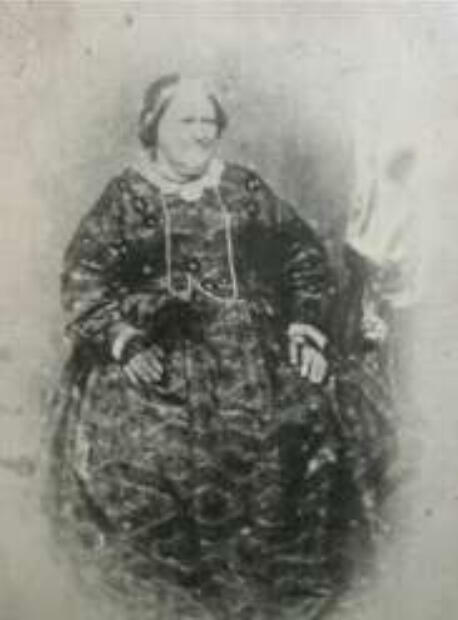
Her Family tree
© Life Moments. Where memories live on.
Her Resting Place
Sophie is buried in the family cemetery at the foot of Mount Camel, at Houhora in the Far North — a few hundred metres from the homestead her sons built for her, and where she spent the last fourteen years of her life.
It is a long way from Uelzen.

© Life Moments. Where memories live on.
Celebrating Her Life
Moments that capture his spirit, humour, and the love he shared.
The Maldon Story is a family project.
It is not a business, it is not for sale.This page was built from the work of others.
Stephen Subritzky, whose "Subritzky Family History
from 1785 to 1915" is the backbone of everything
here, and who gave fifteen years to it.Mike Subritzky — "The Subritzky Family Legend",
"Golden Book of Subritzky Nobility", "Subritzky Ships".Maria Beniston (née Subritzky) · Alan Wagener ·
John Anderson · Bev Sharp · Laurel Jonkers (née Quelch) ·
Jenny Briars and Jenny Leith, "The Road to Sarau" ·
the Kaitaia Museum and the Alice Evans collection ·
the Maldon Museum, Victoria.
From His Funeral
A Song for Dida
The Haka
Grandsons' Farewell
The Barrels
That Sophie carried barrels of tar aboard the St Pauli — and that something was hidden inside them.
© Life Moments. Where memories live on.
The Legend
Every family has a story it cannot prove. The Subritzkys have three.
The Crown
That Reinhold was descended from King Jan III Sobieski of Poland, and fled his village after Napoleon's wars.
The Barrels
That Sophie carried barrels of tar aboard the St Pauli — and that something was hidden inside them.
A Little Red Book
That she kept a little red book all her life, recording the years the family spent in royal company. It passed after her death to the Wagener who took over the homestead, who is said to have laughed long and loud when he finally read it — and then destroyed it.
Stephen Subritzky spent fifteen years chasing these stories, and he wrote down what he found with admirable honesty: as of today, there is no proof on paper that any of them are true.
What there is, is a paper trail. It runs back to 1785. It shows a bricklayer from the Baltic and a weaver's daughter from Uelzen, and no crowns anywhere.
So why did the legend begin? Nobody knows. And the family has never quite been able to let it go — because as one writer of it put it, where there is smoke, there is fire.
We have kept the stories here, exactly as they were handed down, and we have kept them separate from the record.
Both are part of who she was.
© Life Moments. Where memories live on.
ARTEFACTS & PLACES
Germany
The town she was christened in, the church she was married in, and the ship that took her away from both.




Australia
Nelson broke them. Australia made them.




Houhora
The last fourteen years, and the things she left behind.




© Life Moments. Where memories live on.
Her Story
A life of hardship, defiance, and an ending nobody would have predicted.

St Marien Kirche, Uelzen — where Sophie was christened, 25 April 1798.
The Weaver's Daughter
Uelzen, Kingdom of Hanover · 1798
Sophie Elisabeth Körber was baptised in St Marien Kirche in Uelzen on the 25th of April 1798, the daughter of a weaver. The weavers were the poor of the town. When her mother died, Sophie was two years old, and she was buried in a pauper's grave. Her father was gone before Sophie left her teens. She and her brother Heinrich raised themselves. Neither of them ever learned to read or write. Sophie went to work as a mercer — a cloth seller — and that, by every reasonable expectation of the age, was the shape her whole life was going to take.

St Michaelis, Lüneburg — where she married Reinhold Subritzky, 16 November 1817.
The Bricklayer's Bride
Lüneburg · 16 November 1817
She was nineteen when the banns were read in the church of St Michael in Lüneburg, and she married a journeyman bricklayer from the Baltic named Reinhold Subritzky. The parish record describes her as tall, buxom and very attractive. Over the next thirteen years they had four children who lived: Doris, Ludolph, Heinrich and Johannes Anton — and one daughter, Elisabeth, who did not. Reinhold carried a past he never fully explained, and a name the family would spend the next two hundred years arguing about.

St John's, Lüneburg — where Reinhold was buried, 24 June 1833.
Widow at Thirty-Five
Lüneburg · 24 June 1833
Reinhold died of a wasting disease and was buried at the church of St John. Sophie was thirty-five, illiterate, penniless, and left with four children. In the Europe of 1833 a woman in that position was finished — no longer a marriageable prospect, her life effectively over.She had another forty-two years to run. Almost everything she is remembered for was still ahead of her.

The St Pauli, 1/48 scale — Motueka District Museum.
The Sea
The St Pauli · Hamburg to Nelson · 1842–1843
On Boxing Day 1842 the St Pauli weighed anchor on the Elbe with about a hundred and forty German settlers aboard. Eleven of them were Sophie's: herself, her three sons, her brother Heinrich Körber and his family, and her daughter Doris with her new husband Frederick Spanhake and their baby, Otto. The register describes her as a well-dressed widow.In mid-January the baby sickened. Sophie was holding him when he died. She handed his body to the boatswain, and at dawn on the quarterdeck the Reverend Wohlers gave a short service before Otto was committed to the deep — the first of four burials on that voyage.Weeks later, still at sea, a commotion broke out below decks and the agent Beit summoned the offender to the poop deck. It was Sophie. She had fallen in love with a fellow passenger and intended to marry him. Her daughter had objected on account of her age, so Sophie had boxed her ears. Beit informed Doris that she had no power to prevent her mother from marrying, and shortly afterwards Sophie married Heinrich Dieckmann. She was forty-five.

Nelson, 1840s. A handful of huts, and none of what they had been promised.
Nelson
New Zealand · 1843–1845
They landed at Nelson in June 1843 to find a handful of huts and none of what they had been promised. Within a month the settlement was in terror: word came that Captain Wakefield and twenty of the town's leading citizens had been killed at the Wairau. Every man in the settlement, and Sophie's eldest son Louis, worked on the building of Fort Arthur while the town waited for an attack that never came.The land the Germans had paid for never materialised. When the deputations to Beit failed, and he told them the land was too good for them, Sophie's blood boiled. She gathered a large group of women and marched on his house intending to stone him. They were stopped only by the timely intervention of one of the Lutheran missionaries.After two years of hardship the family cut their losses. They sailed on the Palmyra in August 1845 for South Australia.

Klemzig, South Australia. Life improved. It did not stay improved.
Gold and Grief
Klemzig, the Barossa, and the Victorian diggings · 1845–1854
At the German settlement of Klemzig, outside Adelaide, life improved. It did not stay improved. In 1849 Doris — her firstborn, the daughter whose ears she had boxed on the St Pauli — died in childbirth in the Barossa Valley. She was thirty-one.Two years later gold was found in Victoria, and Sophie went with her sons. She was in her fifties. For three years the family moved from one rush to the next, living on the diggings, chasing the next strike.

Maldon, Victoria. When the rush moved on, the Subritzkys stayed and built a town.
Building a Town
Maldon, Victoria · 1854–1860
When the rush at Tarrengower was over and the diggers had moved on, the Subritzkys stayed. They and a handful of other families bought up blocks of land, and on them they built a town: Maldon.From late 1854 Sophie's second husband Henry Dieckmann and the brothers built the first Subritzky homestead on the family's mining claim. That claim was later subdivided, and Henry bought the freehold outright in 1858 or 1859 — the cottage still stands, and the National Trust knows it as Dickman's Cottage.In August 1858, Ludolph — by then known as John Louis — was elected to the very first Maldon Council. He was not eligible to be its President: he was the only German, and it was held that a man who was not English could not properly grasp British law. He served anyway, outspokenly, ruffling establishment feathers and standing up for what he believed were the right decisions.And the family quietly learned the lesson of every gold rush in history. They made far more money selling implements and produce to the diggers than they ever made out of the ground.It was also in Maldon that the Subritzkys met the Wagener family — brickmakers — and the two families have been bound together ever since.

Mount Camel, Houhora. There were no roads. So they bought a ship.
The Matriarch of the Far North
Houhora, New Zealand · 1861–1875
Ludolph and Heinrich sailed for New Zealand in 1860 to begin building. Sophie arrived at Houhora in 1861, aged sixty-three, to find that her sons had raised a great homestead out of stone, local cement and swamp kauri. They were the first European settlers in the Far North; their nearest neighbours were the mission families at Kaitaia. There were no roads. So the family bought a small schooner, the Isabella — and began a association with coastal shipping that runs in the family to this day.Sophie was one of the first women in New Zealand to establish her own brand name. She made and sold "Mrs. Subritzky's" herbal medicines.And then there is the axe. A group of young warriors came down to the homestead one day, having watched from a distance until the men had sailed for Mangonui, to demand payment for the land. The alarm went up and the family ran for the house — all of them except Sophie, who stood alone on the front porch and waited."Vat do you vant?" she asked, in heavily accented English."For the land," they said."For da land!" yelled Old Sophie. "I'll give you for da land!" — and she jumped off the porch, wrenched the axe out of the chopping block and chased them around the yard in her long black dress, roaring at them in a mixture of broken German and English. They withdrew at speed, calling to one another: te wahine porangi — she's a crazy woman.From that day on the warriors held her in the highest regard. Having proved herself in battle, she was considered their equal.

The Subritzky family cemetery, Houhora.
Her Sorrowing Sons
Houhora · 1875
She died at Houhora in 1875, aged seventy-seven. Even in her seventies she is remembered for being able to lift the anvil that stood in the family smithy.She was born in the year Nelson won the Battle of the Nile. She had outlived her husband, her daughter, and several of her grandchildren, and she died at a moment when her sons had achieved a prosperity that would have been unimaginable to the orphaned weaver's daughter in Uelzen.They buried her at the foot of Mount Camel. Seventy years later the writer A. H. Reed, wandering the old gumfields of the north, came across the little Subritzky cemetery by accident. He sat down beside her grave, leaning against the iron railing around it, and was so struck by two words on the headstone that he copied the entire inscription down.The two words were: her sorrowing sons.Today she has more than three thousand descendants, Pākehā and Māori. Many of the women among them carry her name. Her Māori descendants call her Te Paea. And to the whole of the extended family, across five generations and two countries, she has only ever been one thing.Old Sophie.
© Life Moments. Where memories live on.
Leave a Memory
Old Sophie has more than three thousand descendants.If you are one of them — and if you carry a story, a photograph, a name, or a correction — feel free to share it here, as this this page is not finished, and it's not only ours, but yours as well.Feel free to reach out.

Share a story, a photo, or an update about Sophie
The Maldon Story is a family project. It is not a business, it is not for sale.This page was built from the work of others.
Stephen Subritzky, whose "Subritzky Family History from 1785 to 1915" is the backbone of everything here, and who gave fifteen years to it.Mike Subritzky — "The Subritzky Family Legend", "Golden Book of Subritzky Nobility", "Subritzky Ships".Maria Beniston (née Subritzky) · Alan Wagener · John Anderson · Bev Sharp · Laurel Jonkers (née Quelch) · Jenny Briars and Jenny Leith, "The Road to Sarau" · the Kaitaia Museum and the Alice Evans collection · the Maldon Museum, Victoria.
© Life Moments. Where memories live on.